
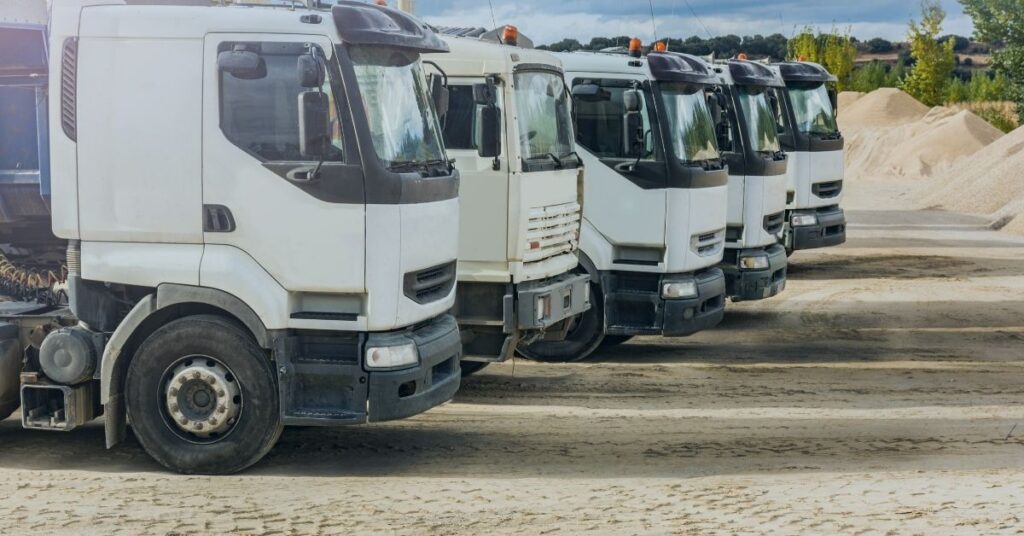
If your organization relies on trucks, vans, or service vehicles, you already know that every gallon of fuel burned adds to both operating costs and your carbon footprint. Renewable natural gas (RNG) is emerging as a compelling alternative fuel choice for companies determined to cut fuel consumption, shrink CO₂ emissions, and keep vehicles on the road without the steep capital costs of full electrification.
Produced from organic waste streams like dairy manure or food scraps, RNG has the same chemical structure as conventional natural gas. RNG can blend seamlessly with conventional compressed natural gas (CNG) because they are molecularly identical (mostly methane). By capturing methane that would otherwise escape into the atmosphere, RNG can turn organic waste into cost-effective fuel that helps fleets move toward fewer emissions today.
Why Fleet Emissions Are a Growing Business Risk
Mounting fuel costs, shareholder’s sustainability expectations, and customer preferences for greener alternatives all converge on one reality: unchecked fleet emissions translate into competitive risk. Fleets that rely exclusively on fossil fuels face significant price volatility. Meanwhile, consumers are increasingly showing preferences for greener companies.
Regulatory and Compliance Pressures on Commercial Fleets
The EPA’s guidance on categories such as on-road engines and GHG regulations can help fleet managers sort out which standards apply to each vehicle class.
At the state level, California’s Advanced Clean Fleets program mandates that local government agencies shift to zero-emission vehicles as assets naturally age out. This illustrates that fleet managers operating nationally must track both federal and state changes to maintain compliance and avoid costly retrofits or accelerated asset turnover.
Fleet Emission Reduction Strategies
By adopting a mix of operational improvements and alternative fuels, it’s possible to reduce fuel consumption, lower greenhouse gas emissions, and keep costs in check. Consider how the following tactics work together to work towards creating a greener, more efficient fleet:
- Boost vehicle efficiency: Regular preventive maintenance, tire pressure monitoring, and driver behavior coaching help engines burn less fuel and generate fewer vehicle emissions, extending asset life and supporting better fuel economy.
- Optimize routing: Dynamic routing software reduces empty miles, idling, and congestion delays, trimming fuel usage and slashing carbon dioxide output on every trip.
- Leverage telematics: Real-time data on speed, harsh braking, and idle time gives fleet management teams the insights they need to correct wasteful habits, improve safety, and deliver measurable emissions reduction.
- Transition to renewable natural gas: Swapping diesel for RNG can dramatically shrink a fleet’s carbon footprint. Existing natural gas trucks and fueling stations may be compatible.
Limitations of Electrification
Electric vehicles attract plenty of attention, and for good reason. They eliminate tailpipe emissions, reduce dependence on volatile fuel markets, and signal a serious commitment to climate change action. Yet for many fleet operators, wide-scale fleet electrification remains a long-range goal rather than an immediate fix. Upfront acquisition costs for medium- and heavy-duty electric vehicles stretch budgets and lengthen payback periods.
Infrastructure is another sticking point. Building or accessing high-capacity charging depots can require multimillion-dollar electrical upgrades, lengthy utility approvals, and real estate that urban depots simply don’t have. Even where charging is available, long dwell times and limited charger availability complicate tight delivery windows and reduce overall fleet efficiency.
Operational realities present further challenges. Heavy-duty trucks hauling maximum payloads across long, unpredictable routes consume far more energy than their light-duty counterparts. Today’s battery ranges can’t always match the demands of sectors like regional haul, refuse collection, or construction.
Until battery technology, charging speed, and grid capacity evolve to meet the unique needs of heavy-duty and high-utilization fleets, alternative fuel strategies such as renewable natural gas offer a realistic bridge. RNG delivers substantial emissions reduction without sacrificing vehicle range, requiring payload, or extending recovery time.
How RNG Reduces Lifecycle Fleet Emissions
Unlike fossil fuels that release carbon long stored underground, renewable natural gas captures methane from existing waste streams before potent greenhouse gas can escape into the atmosphere. RNG works in many current CNG engines and fueling stations, enabling fleet operators to work towards meaningful emissions reduction without overhauling their entire vehicle lineup or infrastructure.
RNG vs. Diesel vs. Electric
To understand RNG’s role in sustainable fleet management, it helps to weigh its performance against diesel and battery electric options. Each fuel carries distinct benefits and trade-offs:
- Energy density and range: Diesel remains the benchmark for long-haul payloads, but RNG offers comparable range in natural gas trucks without the particulate matter and sulfur typical of diesel combustion. Electric vehicles, while zero-emission at the tailpipe, face range constraints and charging downtime that can limit suitability for long routes.
- Emissions profile: RNG can achieve net-zero-or even net-negative-carbon intensity. For example, recovering RNG from dairy cow waste achieves a negative carbon intensity rating, meaning it takes more carbon out of the environment than it produces. Traditional diesel produces high levels of CO₂, NOₓ, and particulate matter, whereas EVs eliminate tailpipe pollution entirely but still depend on the grid’s generation mix for overall greenhouse gas outcomes. When used as fuel, the vehicle still emits some CO2 — but not methane. This is key because methane is about 30 times more potent at trapping heat than carbon dioxide.
- Infrastructure readiness: CNG stations equipped for conventional natural gas can dispense RNG with minimal adjustments, offering fleets a path to fewer emissions. Diesel infrastructure is ubiquitous but carbon-intensive, while electric charging networks for heavy vehicles are still expanding and can require significant electrical upgrades.
RNG Infrastructure and Fueling Compatibility
RNG produced in the United States is purified to pipeline quality — 96%–98% methane — and injected directly into existing natural gas distribution networks. Fleets then contract with fuel suppliers to source volumes matched to their consumption, allowing them to refuel at any CNG station. For private depots, on-site compression equipment originally installed for CNG, often needs only minor tweaks — if any — to dispense RNG.
Having a flexible fueling strategy is quickly becoming essential for resilient fleet operation. RNG delivers that flexibility today, providing tangible emissions reduction, competitive fuel cost stability, and a clear bridge to whatever future mix of EV adoption and alternative fuel your organization pursues.
SJI REV Helps Turn Organic Waste Into Low-Emission Vehicle Fuel
At SJI REV, we help support sustainability goals by converting agricultural byproducts into pipeline-quality renewable natural gas. Our project teams partner with farm operators to capture methane at the source, upgrade it into RNG, and deliver that fuel to fleets that want to reduce emissions without sacrificing uptime, range, or payload. The result: farms gain a new revenue stream, communities benefit from improved air quality, and fleet operators secure a reliable alternative fuel that cuts carbon emissions and fuel cost volatility.
Ready to explore how organic waste can power your vehicles and drive meaningful emissions reduction? View SJI REV’s dairy solutions to see how we can help convert agricultural methane into clean, cost-effective fuel for your operation.