
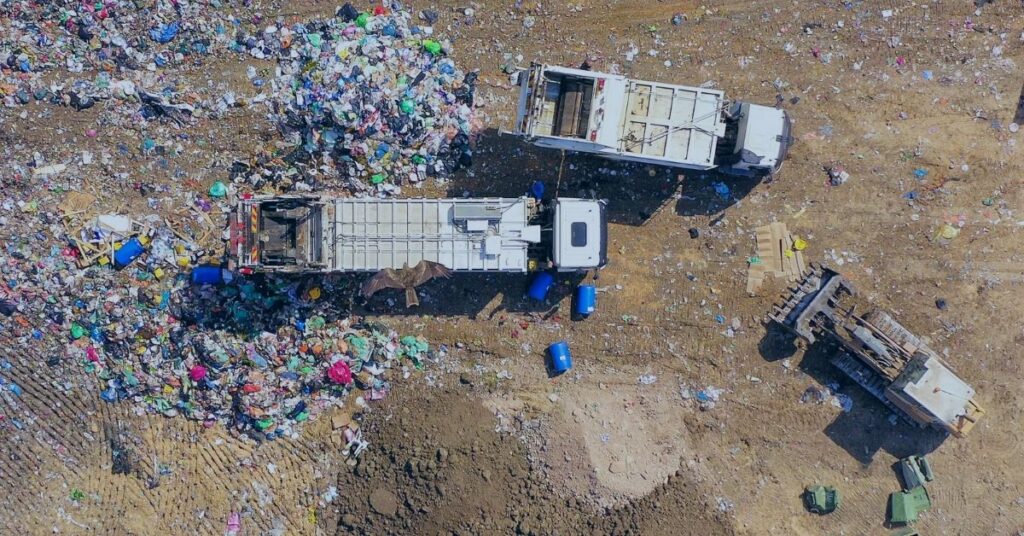
Whether it’s packaging, an apple, or a worn-out t-shirt, when you throw something away, it doesn’t really go “away.” Every time we discard an item, it enters an often-complex journey through the local waste management system. And while we may think of trash as a purely physical problem, the most significant impact of our waste generation might actually be invisible. As the United States continues to produce hundreds of millions of tons of solid waste annually, one byproduct of its decomposition is becoming one of our most pressing environmental challenges.
Thankfully, the story of municipal solid waste (MSW) is shifting from one of disposal to one of resource recovery. What was once only a liability — methane gas seeping out of our landfill sites — is now becoming a potent source of renewable energy. Let’s look at the mechanics of MSW, why it produces such a powerful greenhouse gas, and how we can turn that environmental threat into a more sustainable energy solution.
What Is MSW Solid Waste?
MSW, or municipal solid waste, is the everyday trash and garbage generated by homes, businesses, schools, and hospitals. It includes a vast array of items we interact with daily, such as packaging, food scraps, paper, plastics, yard waste, and old appliances. Managing this waste stream requires a coordinated effort involving waste collection, recycling, composting, and ultimately, responsible disposal.
It is important to distinguish MSW from other types of waste. While it’s a broad category, it typically excludes industrial waste, hazardous waste, and biomedical waste, which all require specialized handling and separate solid waste management protocols. MSW is essentially a mix of recyclable materials (like metals, glass, and paper) and residual waste. And while it poses problems, MSW also has the potential to serve as a resource for energy recovery and material recycling. This can help reduce our total reliance on landfill waste and move us toward a more circular economy.
Understanding MSW
To solve the problem of methane emissions stemming from waste, we first have to understand the ingredients of our trash and what happens to them once they leave the curb. Modern sustainable materials management looks at the entire lifecycle of a material, from the moment of waste generation to its final processing or resource recovery.
The Composition of MSW
According to the Environmental Protection Agency (EPA), the largest portion of MSW is paper and paperboard, followed by food waste, plastics, and yard trimmings. People also discard durable goods, such as appliances and furniture, which can take decades to break down. Even small amounts of organic material mixed with non-recyclables can change the chemical profile of a landfill. In many urban areas, the high density of residential and commercial activity leads to massive MSW generation that requires constant, efficient waste collection services.
How Is MSW Collected and Managed?
After a resident or business places their waste out for pickup, waste management typically transports it to a transfer station. Here, staff sort and compact the waste. They send recyclables to a specialized facility for processing, and haul the remaining material to an MSW facility or a landfill for final disposal. A well-run solid waste program minimizes illegal dumping and keeps hazardous waste out of the general waste stream to protect public health.
What Happens to MSW in Landfills?
When solid waste reaches a landfill, it isn’t just dumped into a hole. Modern landfills are highly regulated, engineered structures. They’re lined with clay and synthetic membranes to prevent debris and liquids from leaching into the groundwater. The waste is spread in layers, compacted, and covered daily with soil or other materials.
This creates a “cell.” Over time, as more cells are added, the landfill becomes an anaerobic (oxygen-free) environment. While this is great for containing the trash, it sets the stage for a specific biological process.
Why Does Organic Waste Produce Methane?
Methane production results from anaerobic digestion. When organic waste is buried in a landfill, it’s cut off from the oxygen it would normally use to decompose. In this oxygen-poor environment, specialized bacteria take over. As they break down the organic material, they release a combination of gases, primarily carbon dioxide and methane. This landfill gas typically comprises about 50% methane, which is the primary component of natural gas.*
*Source: epa.gov
The Environmental Impact of MSW Methane
The environmental impact of this process is significant. Methane is a potent greenhouse gas, far more effective at trapping heat in the atmosphere than carbon dioxide (though carbon dioxide remains in the atmosphere much longer).
The EPA identifies MSW landfills as the third-largest source of human-related methane emissions in the United States. Without proper capture systems, this gas can migrate through the soil or escape into the atmosphere, contributing to climate change and localized air quality issues. Even closed landfills continue to produce methane for decades, making long-term monitoring and solid waste management essential.
Methods for Reducing Methane
The most effective way to handle methane is to prevent it from being created in the first place. This requires a shift in how individuals, businesses, and municipalities approach their waste streams.
- Waste reduction and prevention: At the source, we can reduce waste generation by choosing products with less packaging and opting for durable goods over single-use items.
- Diverting organic waste: Keeping food waste and yard trimmings out of the landfill is an impactful step. Curbside composting programs can turn this organic material into nutrient-rich soil amendments instead of methane.
- Enhanced recycling: Sorting recyclable material properly means fewer items end up in the anaerobic environment of a landfill. This preserves the energy used to create the original material and reduces the need for new resource extraction.
- Sustainable materials management: Municipalities are increasingly adopting “zero waste” goals, focusing on resource recovery and energy recovery to ensure that every part of the waste is used to its highest potential.
Landfill Gas Capture and Control Systems
For the waste that does end up in landfills, we can work to mitigate its impact. Landfill gas capture systems act like a giant vacuum for the landfill. It’s possible to install a network of vertical and horizontal wells throughout the landfill waste. These wells connect to a header pipe system that applies a vacuum, pulling the gas out before it can escape into the atmosphere.
Once captured, the gas is sent to a processing facility. In the past, this gas was often simply flared (burned) to convert the methane into CO2, which is less harmful but still a waste of energy. Today, we focus on energy recovery. The captured gas can be refined into renewable natural gas (RNG). RNG is chemically identical to conventional natural gas and can be injected into existing pipelines to heat homes or fuel vehicles.
The benefits are twofold: We work to prevent a powerful greenhouse gas from entering the atmosphere, and we create a domestic, renewable source of energy that can help reduce our dependence on fossil fuels. This is the essence of modern solid waste management.
Work With SJI REV To Find a MSW Solution That Works
At SJI REV, we work at the forefront of the transition from traditional waste management to innovative energy recovery. We specialize in developing projects that capture methane from municipal solid waste and organic waste facilities, turning an environmental challenge into a cleaner energy asset.
A prime example is our Linden Renewable Energy (LRE) project in New Jersey. As one of the largest food-waste-to-RNG facilities in the United States, LRE has the potential to divert massive amounts of organic material from regional MSW landfills. This project not only helps local municipalities comply with organic waste diversion regulations but also produces pipeline-quality RNG to displace a significant amount of traditional fossil fuel usage. organic waste diversion regulations but also produces pipeline-quality RNG to displace a significant amount of traditional fossil fuel usage.
Whether you’re a municipality looking to improve your solid waste program or a business seeking to reduce your environmental impact, SJI REV has the expertise to build a custom solution. Ready to see how we turn waste into a resource? View SJI REV’s solutions and learn more about our commitment to a cleaner energy future.